
Chain-Link Fence Installation & Repair
Galvanized, 11-gauge minimum. Yard dogs to warehouse security.
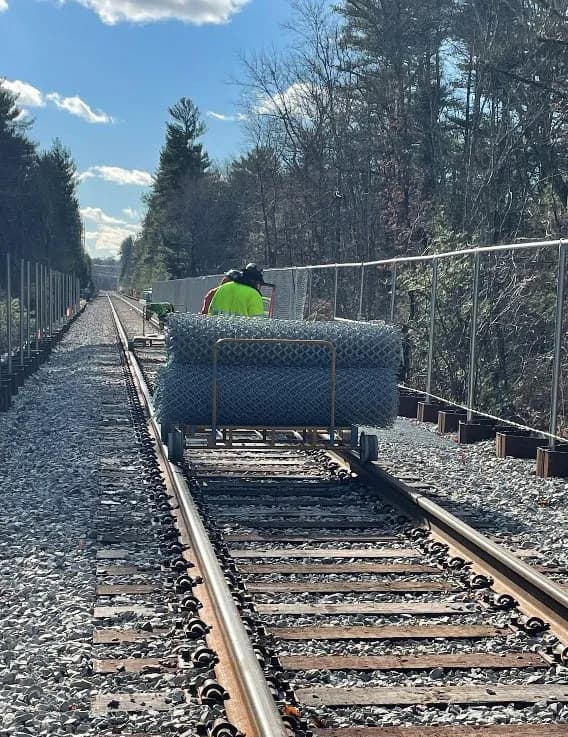
Chain-link is the most honest fence there is. It does one job — hold a line, keep what's in in and what's out out — and it does it for decades with almost nothing asked of you. It's why you see it around ballfields, storage yards, substations, and half the back yards in Denver built before 1985.
It's also the fence most likely to be installed badly, because the parts look forgiving. They aren't. A chain-link fence is a tension system. Get the terminal posts, the bracing, or the fabric tension wrong and the whole run goes wavy inside of a year.
Gauge, coating, and what actually wears out
Chain-link is sold by wire gauge, and lower numbers mean thicker wire. The big-box residential rolls are often 11.5 or 12.5 gauge. We don't build with those. 11-gauge galvanized is our floor for residential; commercial and security work steps up to 9-gauge, which is noticeably heavier in the hand and takes a hit without deforming.
Galvanizing is the zinc coating that keeps the steel from rusting, and it's the part nobody asks about until it fails. Fabric is either galvanized before weaving (GBW) or after weaving (GAW) — after-weaving coats the cut ends too, which is where rust usually starts. Vinyl-coated fabric (typically black or green) puts a polymer jacket over the galvanized wire. It looks better against a yard, it's quieter in wind, and it disappears visually at a distance. It costs more and it's worth it on a residential run you're going to look at every day.
What actually wears out on a chain-link fence, in order: the fabric tension goes slack, the top rail sleeves separate, and the bottom of the fabric rusts where it sits in wet soil and snowmelt. None of those are material failures. They're installation failures.
- ▸11-gauge galvanized — our residential minimum
- ▸9-gauge — commercial, security, high-abuse yards
- ▸Vinyl-coated (black/green) — residential runs where looks matter
- ▸GAW fabric coats the cut ends, where rust starts
How we build it
Terminal posts — ends, corners, and gates — carry the whole tension load of the run. They're a heavier diameter than the line posts and they go deepest. Line posts just hold the fabric up; the terminals hold it tight. Any crew that sets them all the same is telling on itself.
Every post goes in a concrete footer, base below the frost line. Across the Denver metro that means 30 to 36 inches. Colorado freezes hard and often — a warm afternoon and a hard overnight freeze, over and over, all winter. If the bottom of a post sits inside the freeze zone, the ground grabs it and lifts it. That's frost heave, and it's the single most common reason a fence that was straight in October is leaning in April.
Then the fabric gets stretched. We pull it with a come-along against the terminal post, tie it off with a tension bar and bands, and run the top rail through the line-post caps to a string line. The tension wire at the bottom is not optional on our jobs — it's what keeps the bottom edge from bowing out when a dog pushes it or snow loads against it.
- ▸Heavier-gauge terminal posts at ends, corners, and gates
- ▸Concrete footers, base below frost line (30–36 in. on the Front Range)
- ▸Fabric stretched with a come-along, not hand-pulled
- ▸Top rail run to a string line — the eye catches a wave from fifty feet
- ▸Bottom tension wire standard
Colorado factors that change the build
Wind is the one people underestimate. Chain-link is the best fence we build for wind precisely because it's open — air passes straight through the fabric instead of loading it like a sail. On an exposed lot along the foothills where a solid privacy fence needs deeper posts and heavier framing, chain-link is often the fence that just stays put. That's a real engineering advantage, not a consolation prize.
Add privacy slats, though, and you throw that away. Slats turn an open fence into a partial wall and put wind load back on the posts. If you want slats — and there are good reasons to want them around a yard or a dumpster enclosure — say so before we set the posts, because it changes the post spacing and the footer size.
Snow is the other one. Snow drifts against a fence line and packs, and the load rides on the bottom of the fabric. That's what the bottom tension wire fights. Expansive clay across much of the metro adds one more push: the soil swells when it's wet and shrinks when it dries, working a shallow post loose over a few seasons the same way frost does. The defense is the same — depth and a real footer.
Lifespan and upkeep
A properly installed galvanized chain-link fence is a 20-to-30-year fence and frequently outlasts that. Vinyl-coated fabric protects the steel underneath and typically runs at the long end of that. There is no annual maintenance cycle — no staining, no sealing, no board replacement.
What we do tell customers to do once a year, in spring: walk the fence line. Look for slack in the fabric, check that the top rail sleeves haven't crept apart, and look at the bottom edge where snow sat all winter. Re-tensioning a run is cheap. Replacing a rusted-out bottom third of fabric is not.
Gates take the abuse. Hinges loosen, gate posts lean, and a dragging gate is usually the first thing to go on an otherwise fine fence. That's a repair, not a replacement — and it's most of the chain-link service calls we run.
What it costs
Chain-link is the least expensive fence per foot we install. Typical Front Range market pricing for residential galvanized chain-link runs roughly $18–$35 per linear foot installed, with vinyl-coated fabric, commercial heights, 9-gauge, and heavy gates pushing above that. Terrain, access, tear-out of an old fence, and the number of gates move the number more than the material does.
That is not a quote.Those are typical Front Range market ranges, given so you can sanity-check what you're being told. The only number that means anything is the one we write after we walk your lot. Get a free estimate.
Questions we get
How deep do chain-link posts need to be set in Colorado?
The base of the post needs to sit below the frost line, which runs roughly 30 to 36 inches across the Denver metro and the Front Range. We set every post in a concrete footer, and terminal posts — ends, corners, and gates — go deepest because they carry the tension load of the whole run.
What gauge chain-link should I use?
11-gauge galvanized is our minimum for residential work. Commercial, security, and high-abuse yards step up to 9-gauge, which is heavier wire that takes an impact without deforming. The 11.5 and 12.5 gauge fabric sold in big-box rolls is thinner than we're willing to warrant.
Is chain-link a good choice in high wind?
It's the best one we build. Wind passes through open fabric instead of loading it, so chain-link takes far less strain in a downslope windstorm than a solid privacy fence does. Add privacy slats and you lose that advantage — slats turn the fence into a partial wall, so tell us before we set posts.
How long does a chain-link fence last?
Twenty to thirty years is normal for properly installed galvanized fabric, and vinyl-coated fabric usually runs at the long end of that. There's no annual upkeep. Walk the line each spring, check fabric tension and the bottom edge where snow sat, and re-tension as needed.
Can chain-link follow a slope?
Better than any panel fence. Chain-link fabric can be raked to follow grade continuously, so on rolling or sloped ground it stays tight to the earth instead of leaving the stair-step gaps you get under a wood or vinyl panel run.
Chain-Link fence, close to home
Ground, wind, and fence rules change from city to city on the Front Range. Here's what chain-link work looks like where you live.