
Wood Privacy Fence Installation & Repair
Cedar and treated privacy fence. Stained to hold up to Colorado sun.
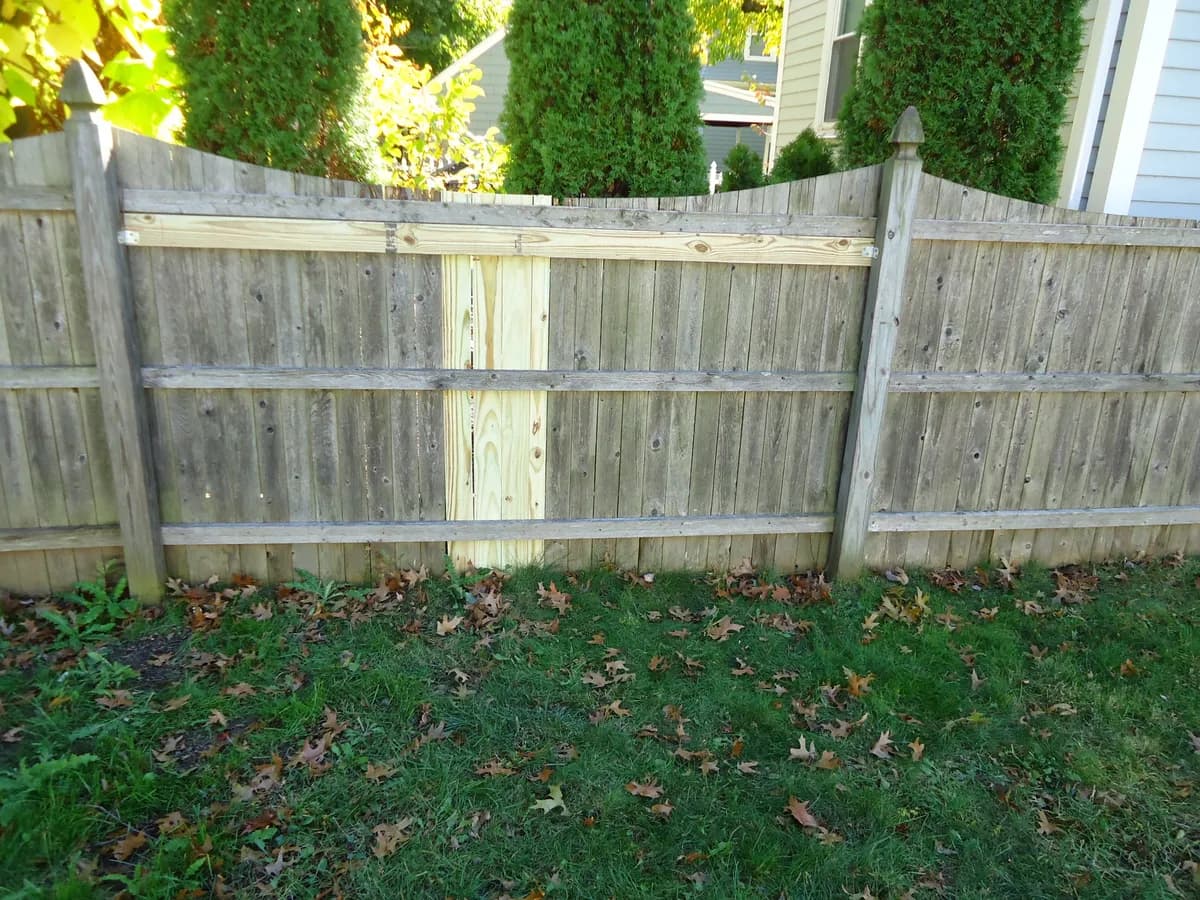
A six-foot wood privacy fence is the most common fence in Denver and the hardest one to build well, and those two facts are related. It's the fence people want — a real backyard, a real edge, something that looks like something. It's also a solid wall standing up in the wind at high altitude under a sun that's harder on the material than most of the country ever sees.
Build it right and it's twenty years of a fence you're glad you paid for. Build it the fast way and it's a leaning, cupping, gray-gone-silver liability by year six. Almost every difference between those two outcomes is buried in the ground where you can't see it.
Cedar vs. pressure-treated pine
Western red cedar is the default we recommend for pickets. It has natural oils that resist rot and insects, it's dimensionally stable — meaning it cups and twists less as it dries — and it takes stain well. It costs more than treated pine and it earns the difference over the life of the fence, especially on the pickets, which are the part you look at.
Pressure-treated pine is chemically treated to resist rot and it's the right call for anything in contact with the ground. It's cheaper, it's stronger in a structural member, and it's what we use for posts and often for rails. Its weakness is movement: treated lumber is usually shipped wet, and as it dries out in Colorado's dry air it can cup, twist, and check. That's a real problem in a picket and a manageable one in a post that's locked in concrete.
The build most Front Range yards should get is a hybrid: treated posts and rails carrying cedar pickets. Steel posts are the third option — they don't rot at grade, they don't twist, and they're worth talking about on a long exposed run, though they cost more and change the look.
- ▸Cedar — pickets. Stable, rot-resistant, takes stain, looks right.
- ▸Pressure-treated pine — posts and rails. Ground-contact rated, cheaper, stronger.
- ▸Steel posts — the upgrade on long, exposed, wind-loaded runs.
Wind load is the whole problem
A six-foot solid privacy fence is a sail. Every square foot of picket catches wind and hands the load to the posts, and the Front Range hands it a lot — downslope windstorms come off the foothills and the gusts they bring are the reason you see fences flat on the ground across the metro after a bad night.
That's why our standard post depth on a six-foot privacy fence is 36 inches, not the 24 you'll see quoted. Frost line sets the floor at roughly 30 to 36 inches across the metro; wind is what pushes us to the top of that range and past it on exposed lots. Corners, ends, and gate posts go deeper still, and hole diameter matters as much as depth — a wider footer resists overturning better than a deeper skinny one.
The other wind decision is the fence itself. A shadowbox or board-on-board layout — pickets alternating on either side of the rails with a deliberate gap — lets some air bleed through, looks finished from both sides, and takes measurably less load than a fully solid panel. On a wind-hammered lot we will push you toward it, and we'll tell you why.
- ▸36 in. standard post depth on 6 ft privacy fence
- ▸Corners, ends, and gate posts deeper and in wider footers
- ▸Shadowbox / board-on-board bleeds wind and looks good from both sides
- ▸Three rails on 6 ft — not two
Altitude, UV, and why the finish matters more here
Colorado sits high, and UV intensity climbs with elevation. Denver is a mile up; the foothill and Douglas County suburbs sit higher still. That sun does two things to bare wood: it bleaches the surface gray, and it breaks down the lignin holding the surface fibers together, which is why untreated wood goes fuzzy and starts checking.
Add the dry air. Colorado's low humidity pulls moisture out of lumber fast, and fast drying is what causes cupping, twisting, and end-checking in pickets. This is the single biggest reason a wood fence here can look ten years old at year three.
The defense is a penetrating stain with real UV blockers, not paint. Paint sits on the surface, traps moisture behind the film, and then peels — and once it peels you're scraping, not re-coating. A quality semi-transparent or semi-solid stain soaks in, slows the moisture exchange, and re-coats by just cleaning and rolling more on. Plan on re-coating every two to four years here depending on exposure. A south- or west-facing run will want it sooner than a shaded north side.
Ground contact, snow, and drainage
The fastest way to kill a wood fence is to let it sit in water. Two places that happens: the base of the post inside its concrete footer, and the bottom edge of the pickets where snow packs against them and stays for weeks.
For the posts, we crown the concrete so it mounds up at grade and slopes away from the post. A flat or dished footer top is a bowl, and a bowl full of snowmelt against a wood post is rot on a timer. We also keep the bottom of the post off the base of the hole — a few inches of gravel underneath gives water somewhere to go.
For the pickets, we hold them up off the dirt. A gap at the bottom — or a treated kickboard / rot board running along the bottom as a sacrificial member — keeps cedar out of the wet. The kickboard is a cheap part that's designed to be replaced, and it saves the pickets it's protecting.
- ▸Concrete crowned to shed water, not dished to hold it
- ▸Gravel under the post so the base drains
- ▸Pickets held off grade — gap or treated kickboard
- ▸Galvanized or stainless fasteners; plain steel bleeds black streaks down cedar
Lifespan and upkeep
A cedar privacy fence on treated posts, set to depth, stained and kept stained, is a 15-to-25-year fence on the Front Range. Skip the stain and you're closer to 10 to 15, and it'll look tired for most of them. Treated pine pickets fall in a similar band but demand more from you on the movement front.
The maintenance is honest and small: wash it, re-stain it every two to four years, replace the occasional cupped picket, and reset a hinge when a gate starts to drag. None of that is hard. The mistake is letting it slide for a decade and then asking whether the whole fence needs to come down — which, by then, it usually does.
What it costs
Wood privacy sits in the middle of the market — more than chain-link, less than vinyl. Typical Front Range market pricing for a six-foot cedar privacy fence runs roughly $35–$60 per linear foot installed, with cedar grade, shadowbox construction, steel posts, tear-out of an old fence, hard access, and gates all moving it. Treated pine comes in lower; steel posts and premium cedar come in higher.
That is not a quote.Those are typical Front Range market ranges, given so you can sanity-check what you're being told. The only number that means anything is the one we write after we walk your lot. Get a free estimate.
Questions we get
Cedar or pressure-treated — which should I use?
Both, in the right place. Cedar for the pickets: it's stable, rot-resistant, and takes stain. Pressure-treated pine for the posts and often the rails: it's ground-contact rated, stronger, and cheaper. Treated pickets tend to cup and twist as they dry in Colorado's dry air.
How deep should posts go on a six-foot wood fence?
Thirty-six inches is our standard. The frost line sets the floor at roughly 30 to 36 inches across the metro, and wind load on a solid privacy fence pushes us to the top of that range. Corners, ends, and gate posts go deeper and in wider footers, because they carry the most strain.
Should I stain or paint a wood fence in Colorado?
Stain. Paint sits on the surface, traps moisture behind the film, and eventually peels, which means scraping. A penetrating stain with UV blockers soaks in and re-coats with a wash and a roller. At this altitude the UV is hard on bare wood — plan on re-coating every two to four years.
Will a solid privacy fence survive Front Range wind?
If it's built for it. A solid six-foot fence is a sail, and downslope windstorms off the foothills are what put fences flat on the ground here. Depth, wider footers, three rails instead of two, and a shadowbox layout that lets air bleed through are what keep it standing.
How long does a wood privacy fence last here?
Cedar on treated posts, set to depth and kept stained, is a 15-to-25-year fence. Let the finish go and you're looking at closer to 10 to 15 — and it'll look weathered for most of them. The upkeep is small: wash, re-stain every two to four years, swap a cupped picket now and then.
Wood Privacy fence, close to home
Ground, wind, and fence rules change from city to city on the Front Range. Here's what wood privacy work looks like where you live.